How the nervous system is organized
Start with the big picture: how the brain, spinal cord, nerves, and individual nerve cells fit together into one communicating system.
Start with the big picture
The nervous system can be divided anatomically into the central nervous system and peripheral nervous system. The central nervous system consists of the brain and spinal cord. The peripheral nervous system includes neural structures outside the CNS that connect it with the rest of the body.
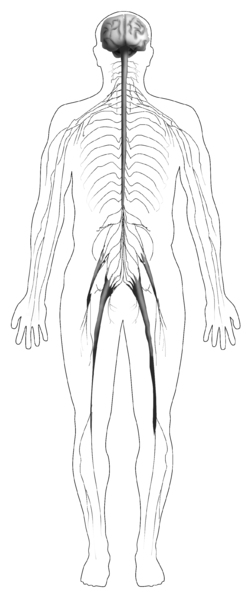
The nervous system from head to body
This illustration provides a broad view of the neural pathways extending throughout the human body.
Central Nervous System
The brain and spinal cord make up the central nervous system. Together they form the central processing and coordination component of the nervous system.
Peripheral Nervous System
The peripheral nervous system includes neural structures outside the brain and spinal cord and connects the CNS with tissues throughout the body.
Think of the CNS as the center and the PNS as the connection network.
This simple distinction will make the rest of the course much easier to understand. As we move through the lessons, we will zoom in from this whole-system view to individual structures and cells.
How information moves
The nervous system constantly receives information from the body and environment and produces responses. Sensory information can travel toward the central nervous system, while motor commands can travel outward toward muscles and other target tissues.
A useful mental model
Imagine touching something unexpectedly hot. Sensory receptors detect the stimulus. Information travels through peripheral pathways toward the nervous system. A rapid protective response can involve the spinal cord, while additional information is processed by the brain.
The nervous system is constantly communicating.
What looks like a single action—moving your hand, seeing an object, or reacting to a sound—can involve many structures communicating with one another.